

Design and analysis of mechanical systems and engineering components.
Robotics design, automation, and intelligent control systems.
Sensors, actuators, instrumentation, and real-time data acquisition.
Internet of Things (IoT) and smart manufacturing technologies.
Manufacturing processes, quality control, and industrial production systems.
Research, innovation, entrepreneurship, and problem-solving skills.
General Minimum Entry Requirements for Admission
Completed A-Level studies before 2014
Completed Foundation Programme of the Open University of Tanzania (OUT) with a GPA of 3.0 accumulated from six subjects and at least a C grade from three core subjects in Science (including Mathematics) PLUS An Advanced Certificate of Secondary Education Examination with at least 1.5 points (i.e. an “E” and “S”) from Physics and Mathematics
Completed Foundation Programme of the Open University of Tanzania (OUT) with a GPA of 3.0 accumulated from six subjects and at least a C grade from three core subjects in Science (including Mathematics) PLUS An Advanced Certificate of Secondary Education Examination with at least 1.5 points (i.e. an “E” and “S”) from Physics and Mathematics
Full Technician Certificate (FTC) in Mechanical, Maritime, Automotive, Automobile, Mechatronics, Industrial, Industrial Design, Electrical, Electronics Electromechanical, Aerospace, Aircraft Maintenance Engineering, Aeronautical, Robotics, Production Engineering with an average of C PLUS possession of Certificate of Secondary Education Examination (CSEE) with a pass in Mathematics, Physics, Chemistry and any other subject.
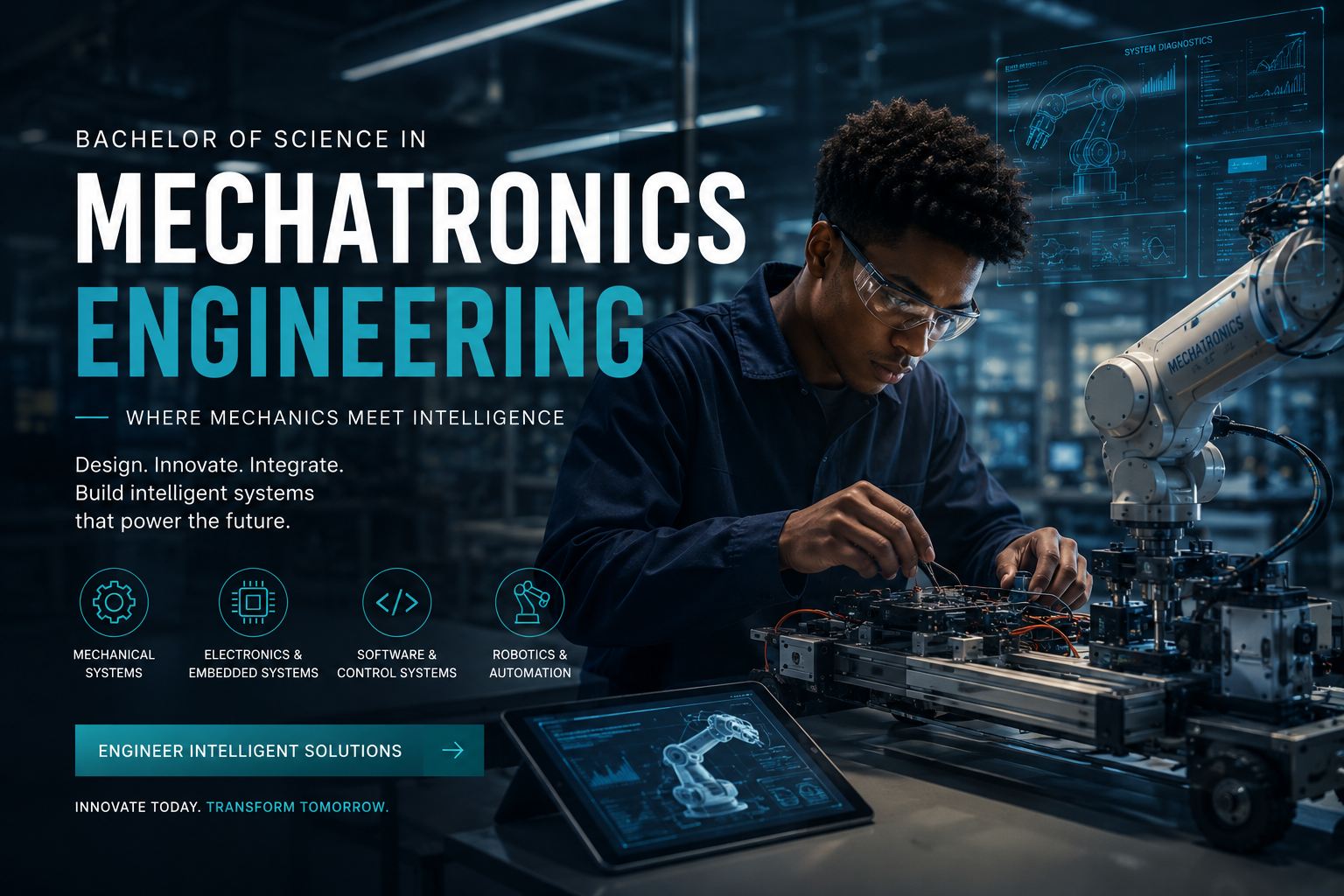
The Bachelor of Science in Mechatronics Engineering (BSc Mechatronics Engineering) is an interdisciplinary programme that integrates mechanical engineering, electrical and electronic engineering, computer engineering, automation, and intelligent control systems. The programme prepares students to design, develop, operate, and maintain smart machines, automated manufacturing systems, industrial robots, and intelligent products used in modern industries.
Students gain practical experience through laboratory work, engineering projects, industrial training, and research, enabling them to solve complex engineering challenges using advanced technologies. Graduates are equipped for careers in manufacturing, robotics, automation, automotive engineering, aerospace, energy, healthcare, and other technology-driven industries.
Mechanical System Design
Electronics and Embedded Systems
Automation and Robotics
Control Systems and Smart Technologies
Engineering Practice and Innovation

Education is the foundation of all we do in life. It shapes who we are and what we aspire to be.



.png)



 SJCHAS - JOB Vacancy Announcements